
Before there is a vessel, there is earth.
Every ceramic piece begins with something remarkably simple: clay.
Long before a potter places a vessel into a kiln, before the flames transform its surface, and before a glaze reveals its color, there is a material that has spent countless years forming beneath the earth.
In Korea, clay is more than the raw material of pottery. It is part of the country's geography, history, and cultural identity.
From the mountains of Gangwon Province to the southern regions of the Korean Peninsula and the volcanic landscape of Jeju Island, different environments have provided materials that helped shape Korea's distinctive ceramic traditions.
To understand Korean ceramics, we must first understand the earth from which they are made.
1. The Different Types of Korean Ceramic Clay
Not all clay is the same.
Its mineral composition, iron content, particle size, and behavior under heat can vary considerably. These differences influence how a vessel is shaped, how it responds to firing, and what colors and textures eventually appear.
Over centuries, Korean potters developed remarkable techniques by understanding the characteristics of the materials available to them.
Four major ceramic traditions illustrate this relationship particularly well.
White Porcelain (Baekja, 백자)
Prominent during the Joseon Dynasty, white porcelain is made from carefully prepared, low-iron ceramic materials. Its clean, refined appearance reflects the simplicity and elegance of traditional Korean aesthetics.
Celadon (Cheongja, 청자)
Celebrated during the Goryeo Dynasty, Korean celadon is known for its distinctive jade-green glaze. Its color results from the interaction of iron-bearing materials, glaze composition, and the kiln's firing atmosphere.
Buncheong Stoneware (Buncheong Sagi, 분청사기)
Buncheong flourished during the early Joseon period. Made with grayish stoneware clay and often decorated with white slip, it is admired for its expressive patterns, natural textures, and spontaneous craftsmanship.
Traditional Onggi (Onggi, 옹기)
Onggi is traditional Korean earthenware, commonly used for food storage and fermentation. Made with iron-bearing clay, it is valued for its durability, practicality, and distinctive earthy appearance.
Other Korean Ceramic Materials
Korean pottery also uses materials such as kaolin, porcelain stone, and refractory clay. Each contributes different properties to the ceramic body, influencing its strength, texture, and firing behavior.
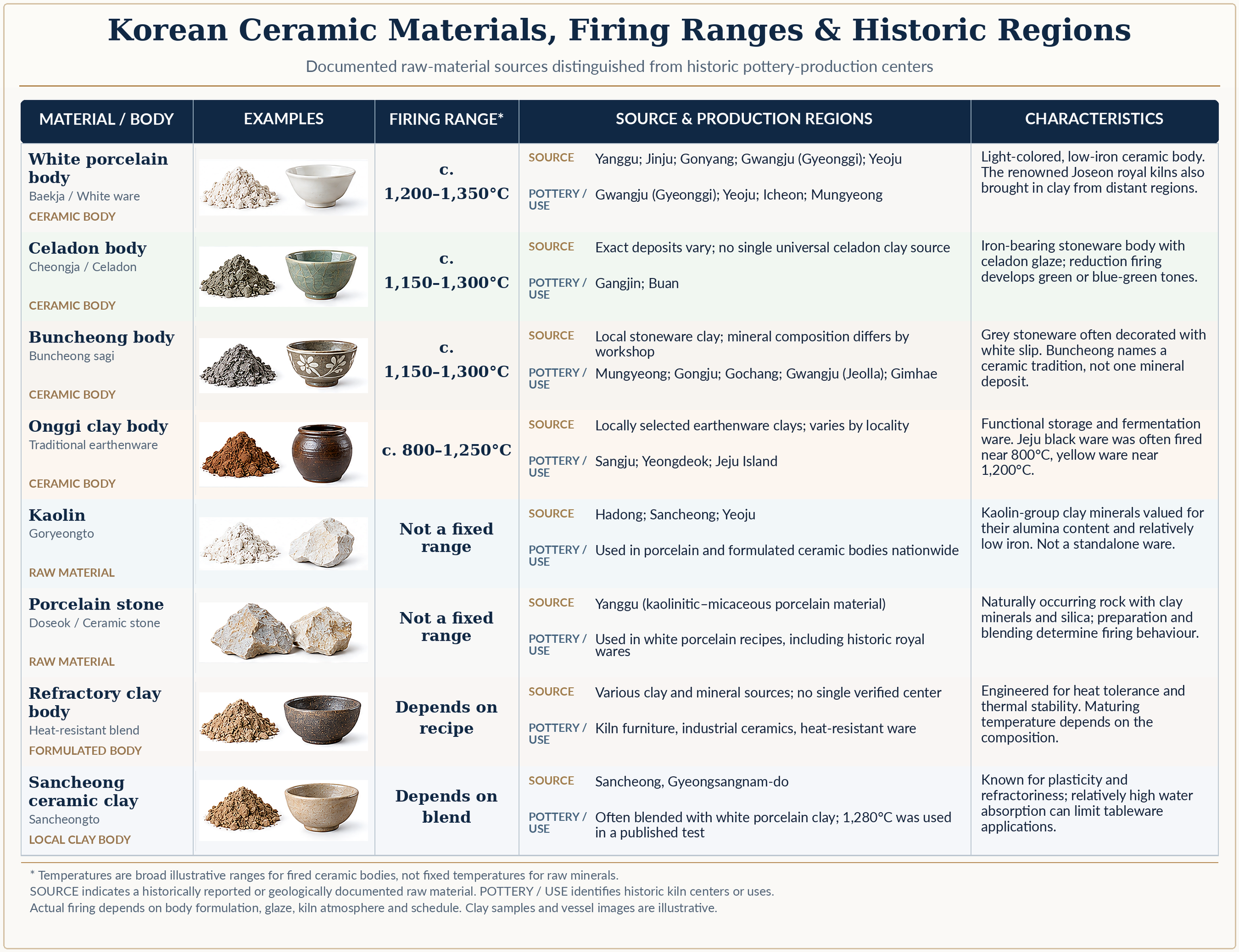
Korean Ceramic Clay Types, Firing Temperatures & Major Sources
An overview of major Korean ceramic materials, their approximate firing ranges, representative source regions, and defining characteristics.
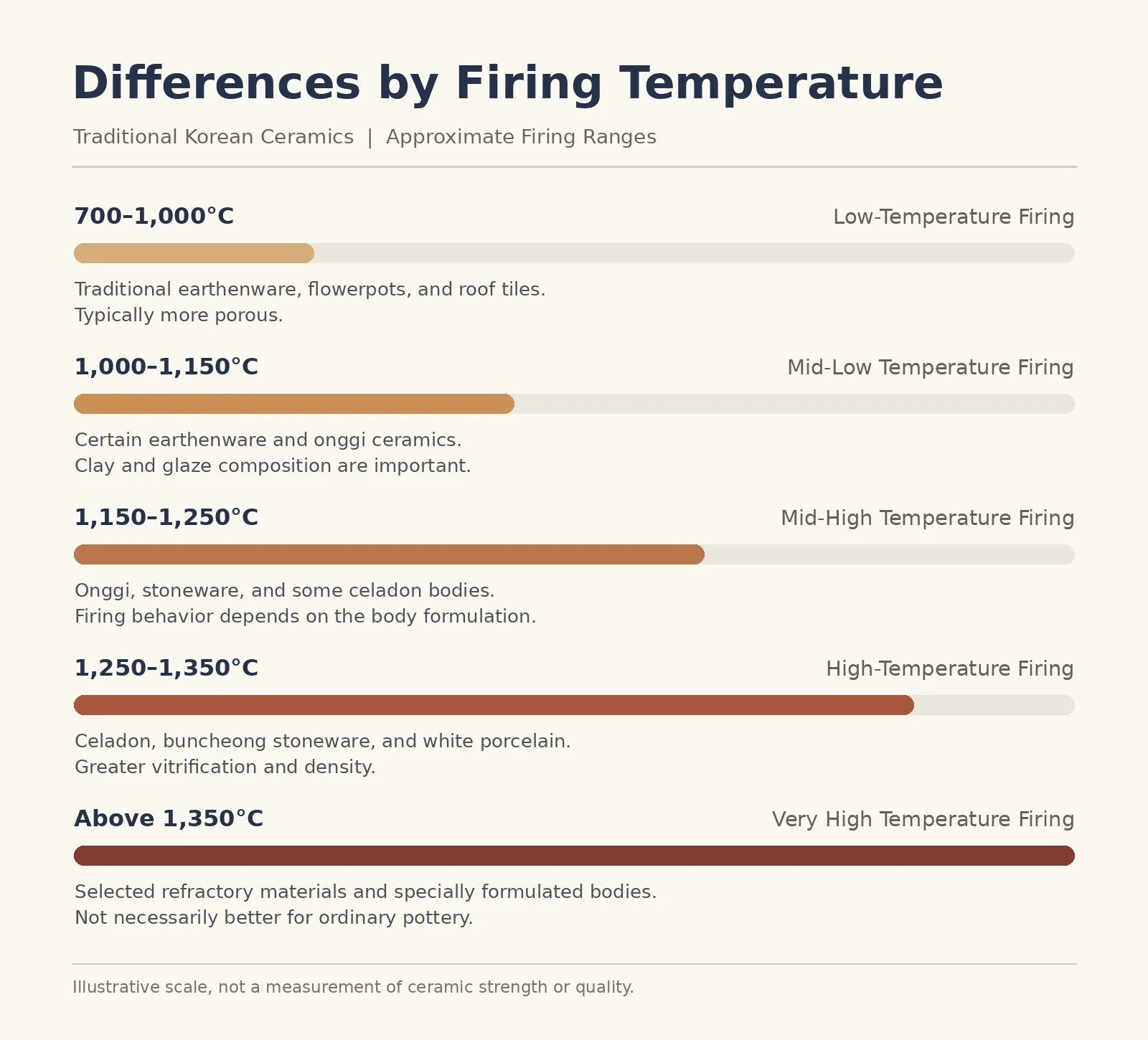
Differences by Firing Temperature
An illustrative comparison of firing-temperature ranges and their relationship to traditional Korean ceramic bodies.
2. Where Korean Clay Comes From
Korea has diverse geological formations that have provided raw materials for ceramics for centuries. The availability of clay, combined with regional craftsmanship and firing traditions, helped shape the development of Korean pottery.
Yanggu, Jinju, and Gonyang: White Clay for Joseon Porcelain
Yanggu, Jinju, and Gonyang were historically important sources of white clay during the Joseon Dynasty (1392–1910). Clay from these regions was supplied to royal porcelain kilns in Gwangju, Gyeonggi Province, where fine white porcelain was produced.
Gangjin and Buan: Goryeo Celadon
Gangjin and Buan were major centers of celadon production during the Goryeo Dynasty (918–1392). Gangjin, in particular, benefited from deposits of ceramic raw materials, including kaolin and silica, which supported its renowned celadon production.
Mungyeong, Gongju, Gochang, Gwangju, and Gimhae: Buncheong and White Clay
These regions preserve important traditions of Buncheong ware, a distinctive Korean ceramic style developed during the late Goryeo and early Joseon periods.
Mungyeong is especially notable for its long history of producing both Buncheong ware and white porcelain. Gongju, Gochang, Gwangju in Jeolla, and Gimhae are also known for their historic Buncheong kilns.
Hadong and Sancheong: Kaolin Deposits
Hadong and Sancheong are recognized for their kaolin and clay deposits. These minerals are important raw materials for porcelain, refractory ceramics, and various ceramic bodies.
Sangju and Yeongdeok: Traditional Onggi
Sangju and Yeongdeok in Gyeongsangbuk-do have longstanding traditions of producing onggi, Korea's traditional earthenware jars. Their craftsmanship reflects generations of experience in clay preparation and wood-fired pottery.
Jeju Island: Traditional Jeju Onggi
Jeju developed a distinctive pottery tradition using local, iron-rich clay and stone-built kilns.
Two traditional firing methods produced yellow ware at approximately 1,100–1,200°C and black ware at around 700–900°C. These techniques gave Jeju pottery its characteristic colors and textures.
A Note on Clay Sources and Pottery Centers
Not every historic pottery center was necessarily a major clay deposit. Some regions are documented sources of ceramic minerals, while others are significant for their surviving kilns and centuries of pottery production.
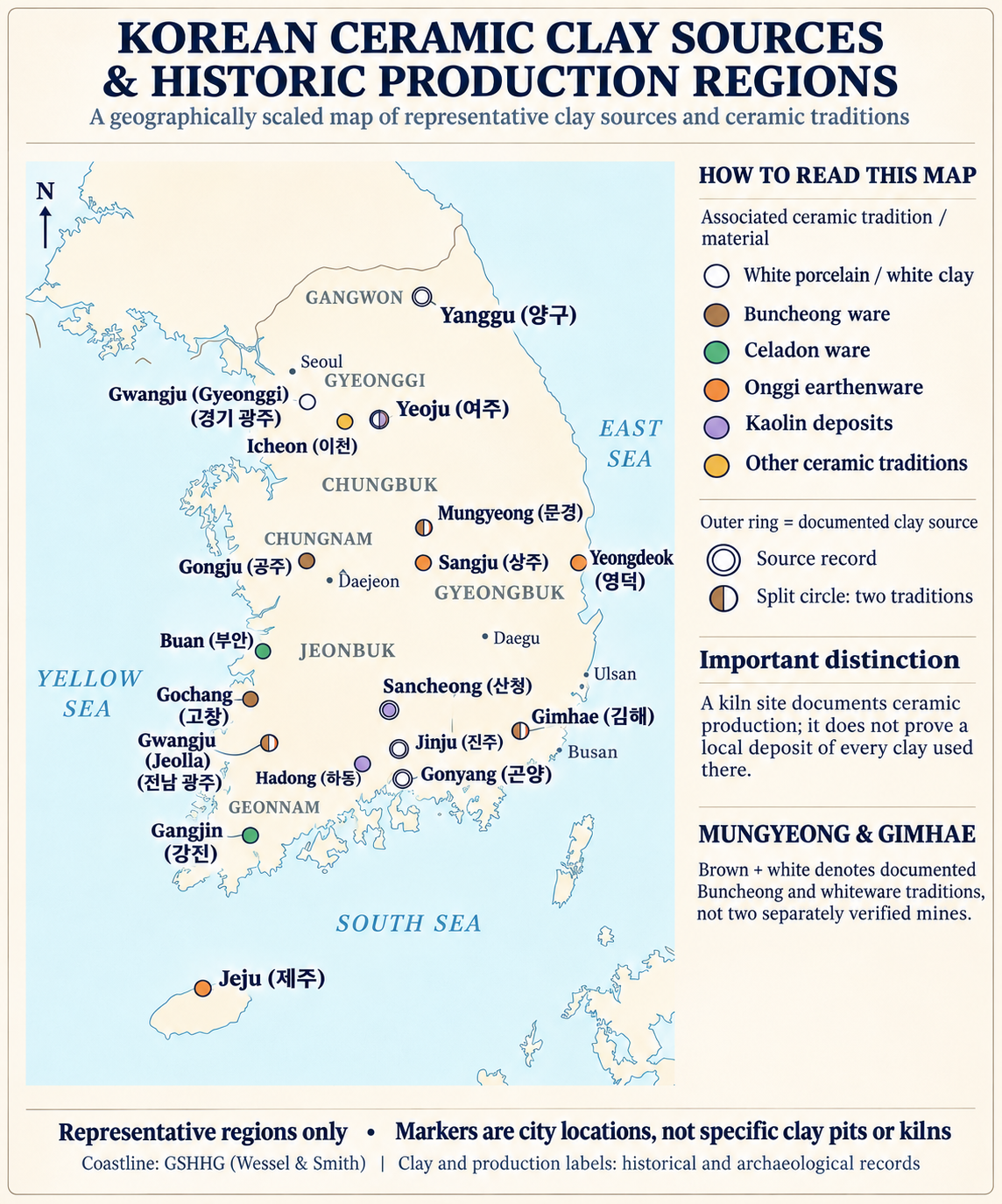
Major historical and representative sources of Korean ceramic clay, including Jeju Island. The map does not indicate all active clay deposits or mining sites.
3. Why the Origin of Clay Matters
The origin of clay plays an important role in understanding Korean ceramics.
Clay from different regions can vary in mineral composition, iron content, texture, and firing properties. These differences influence how potters work with the material and how the finished ceramics look and feel.
Historically, access to local clay resources also contributed to the development of regional pottery traditions.
For collectors and tea enthusiasts, knowing the origin of the clay provides valuable insight into a ceramic piece's materials, craftsmanship, and historical background.
However, the place where a ceramic piece is made does not necessarily indicate where its clay was sourced. The actual origin of the material should be confirmed with the artisan.
4. Why the Same Clay Can Produce Different Results
Yet even when two artisans use the same clay and similar firing temperatures, their finished pieces can look remarkably different. This is because many other elements influence the final result, including shaping techniques, glaze composition, kiln atmosphere, and the artisan's experience.
In the upcoming chapters of our Elements of Korean Ceramics series, we will explore these elements further, including traditional kilns, natural glazes, and the craftsmanship of Korean artisans.
By understanding how these elements work together, we can better appreciate the techniques and traditions behind each piece of Korean ceramics.
Editorial Note
Firing temperatures are approximate and may vary depending on clay composition, glazing, and firing conditions. The regions mentioned represent traditional ceramic production centers or known clay sources and do not necessarily indicate the origin of materials used in contemporary ceramics.
